The 7 Steps to Successful Strategic Planning!


The 7 Steps to Successful Strategic Planning!
Strategic planning is much more than a day of reflection or a document that ends up sitting on a shelf. It is a structured process that helps an organization understand its current situation, define a shared vision, and chart the course for the years ahead.
There is no one-size-fits-all approach : the process should be tailored to each organization’s reality, maturity, and ambitions. However, it generally involves seven key steps.
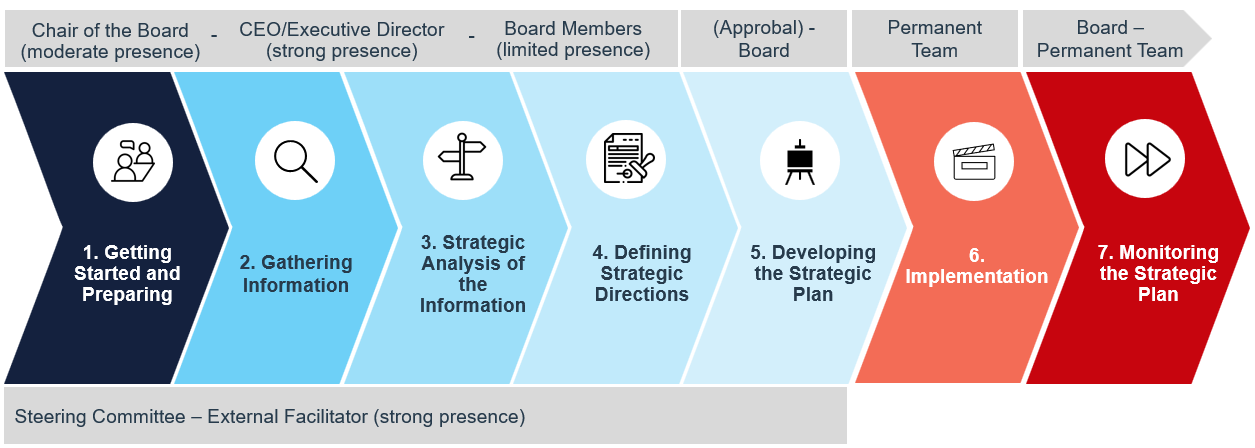
1. Getting Started and Preparing
The first step is to clarify the objectives of the process : Why undertake it now? What decisions should it support? Who should contribute?
It is also important to define the timeline, the roles of management and the board of directors, the stakeholders to be consulted, and the informationto be gathered. This preparation helps ensure that the process is tailored to the organization’s needs.
2. Gathering Information
A relevant strategy must be grounded in reality. This means developing a clear picture of the organization : its strengths, capabilities, and challenges, and examining changes in its environment, including customer needs, competition, the economy, technology, regulations, and the workforce.
Data should be enriched by the perspectives of employees, executives, board members, and partners. The goal is not to document everything, but rather to develop an accurate picture that will support sound decision-making.
3. Strategic Analysis of the Information
The organization must then interpret this information : Which changes will have the greatest impact? What opportunities should it pursue? Which vulnerabilities should it take seriously?
This analysis helps distinguish strategic issues from operational concerns and identify the key insights that will truly influence the choices ahead.
4. Defining Strategic Directions
Based on these insights, the organization clarifies its ambition,vision, and key priorities.
Making choices also means deciding what not to pursue : no organization can do everything at once. Strategic directions should clearly identify what matters most while giving teams enough flexibility to determine how those priorities will be implemented.
5. Developing the Strategic Plan
The strategic directions are then translated into a concrete plan. For each priority, the organization defines objectives, desired outcomes, and indicators that will be used to measure progress.
The plan becomes a shared reference point for guiding decisions, ensuring consistency across initiatives, and allocating resources according to priorities.
6. Implementation
The strategy must be reflected in budgets, projects, team priorities, and resource allocation. An action plan translates strategic objectives into responsibilities, initiatives, and concrete results.
Engagement is also essential. Teams need to understand the choices that have been made, the reasons behind them, and what they mean for their work. Change management therefore begins with the first consultations, well before the plan is formally adopted.
7. Monitoring the Strategic Plan
The work does not end once the plan is adopted. Monitoring should be integrated into the organization’s regular governance processes.
A dashboard presented periodically to the board of directors can be used to track indicators and milestones related to the strategic directions, identify gaps, and inform strategic decision-making.
An annual review provides an opportunity to assess whether the strategic directions remain relevant, whether results are progressing as expected, and whether changes in the organization’s environment require adjustments.
A Living Guide
A strategic plan is a living guide that evolves alongside the organization. Tools such as Planivore can make it easier to track progress and keep priorities front and centre.
Small and medium-sized businesses, nonprofits, associations, and large corporations alike can benefit from reflecting on the direction they want totake. The key is to adopt an approach that reflects their reality and ambitions.
Thinking about developing or revisiting your strategic plan? Our team can help you create a plan tailored to your organization.