The Strategic Retreat: A Catalyst for Creativity and Collaboration

The Strategic Retreat: A Catalyst for Creativity and Collaboration
You may know that the Québec expression lac-à-l'épaule originated from a landmark strategic meeting held in 1962 by Premier Jean Lesage's government at Lac à l'Épaule, where transformative decisions, including the nationalization of electricity, were made. Even earlier, this iconic location hosted strategic discussions between Franklin D. Roosevelt and Winston Churchill during the Second World War.
Perhaps because of its origins, the strategic retreat is sometimes mistakenly associated only with periods of organizational upheaval. In reality, it is much more than a crisis management exercise. A strategic retreat is a proactive opportunity for leadership teams to think strategically, anticipate future challenges, strengthen collaboration, and foster creativity in an environment designed to encourage innovation.
Whether it has become an annual tradition or serves as a dedicated reflection period before updating your strategic plan, a strategic retreat is a valuable investment in your organization's long-term alignment, creativity, and performance.
To help you maximize the value of your next retreat, here are four essential elements to consider.
1. Design the Retreat with the End Goal in Mind
What outcomes do you want to achieve by the end of your retreat?
Every organization is different, and every agenda should be tailored to its specific objectives. At Point Cardinal, customization is at the heart of our approach. Some organizations benefit from highly structured workshops focused on specific business challenges, while others prefer more exploratory sessions that encourage creativity and strengthen relationships.
The facilitation style also matters. Should the atmosphere be warm, engaging, and interactive, or more analytical and structured?
Our clients provide excellent examples. During a strategic retreat for a Montréal community organization, the primary objective was to address internal team cohesion challenges. Through participatory workshops and co-regulation activities, the team successfully resolved tensions and rebuilt a productive collaborative dynamic. The sessions were highly interactive and centered on employees' workplace experience.
For a sector workforce committee, the retreat served as a pause to help employees get to know one another better, reaffirm and enrich the organization's purpose, and generate promising initiatives in preparation for an upcoming strategic planning process.
By clearly defining your objectives from the outset, you can create a customized program that maximizes the impact of every activity and delivers meaningful, measurable results.
2. Bring in an External Facilitator
An external facilitator can make a significant difference in the success of a strategic retreat.
Because they are independent of the organization's internal dynamics, they create an environment where participants feel comfortable expressing themselves openly and where conversations remain objective and constructive. Their expertise in group facilitation also helps structure discussions while preserving creativity and maintaining momentum.
An experienced facilitator ensures every participant has a voice, prevents discussions from becoming unproductive, and keeps the group focused on achieving its strategic objectives. Their outside perspective and facilitation techniques often help teams uncover new ideas that might otherwise remain unexplored.
Before the retreat, take the time to meet with your facilitator to ensure their approach aligns with your organization's culture and expectations.
3. Choose the Right Location
We strongly recommend holding your strategic retreat away from the office.
A neutral environment naturally encourages collaboration, creativity, and innovation while reducing the distractions of everyday work. Although relocating, and sometimes accommodating, your team requires additional planning and resources, the long-term benefits for team cohesion and strategic thinking are well worth the investment.
When selecting a venue, consider practical elements such as flexible meeting rooms, comfortable furnishings, presentation equipment, whiteboards or flip charts, reliable technology, and convenient catering or kitchen facilities.
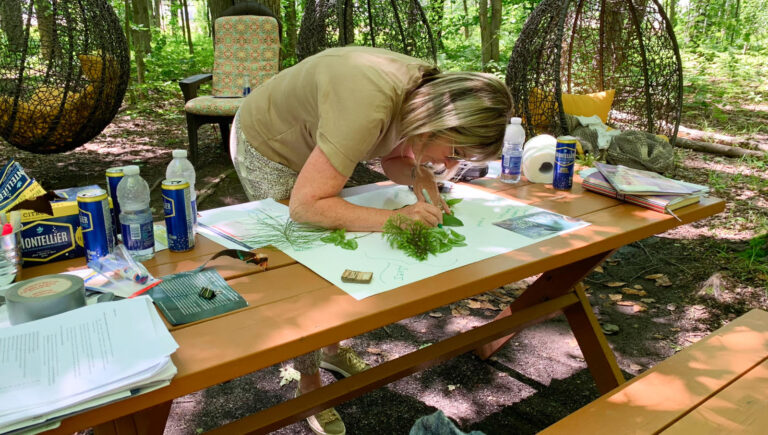
The ideal setting also offers something extra. A quiet location, particularly one surrounded by nature, with comfortable spaces for informal conversations and relaxation can significantly enhance both focus and creativity.
4. Choose a Format That Gives People Time to Think
The ideal length of a strategic retreat depends on your objectives.
If your goal is to align priorities and make key decisions efficiently, a retreat lasting one and a half to two days is often sufficient. This format typically includes one full day of strategic workshops followed by a half-day to consolidate ideas and develop an action plan. It is also popular because it minimizes the impact on employees' personal schedules.
For more complex strategic issues—or when you want to intentionally incorporate opportunities for reflection, team building, and renewal—a two- to three-day retreat is often more effective. Spacing work sessions over several days and interspersing them with walks, informal discussions, or group activities creates an environment that supports deeper thinking, stronger collaboration, and more innovative ideas.
A well-designed strategic retreat is a powerful tool for strengthening collaboration, fostering creativity, and aligning your organization around a shared vision.
By thoughtfully planning every aspect, from defining objectives and selecting the right facilitator to choosing the location and determining the appropriate format, you create the conditions for meaningful conversations and innovative solutions.
If you're looking for guidance in designing and facilitating your next strategic retreat, our team of experts would be pleased to help.